EU vehicle regulation fails in extreme cold – northern corridors under pressure - MTK en
News
EU vehicle regulation fails in extreme cold – northern corridors under pressure
10.02.2026
Severe cold weather is exposing critical shortcomings in EU regulation. In the European Parliament, discussions are now under way on how flexibility could be introduced into vehicle and emissions regulation so that it functions also in Arctic conditions and safeguards transport, economic activity and security of supply in northern regions.
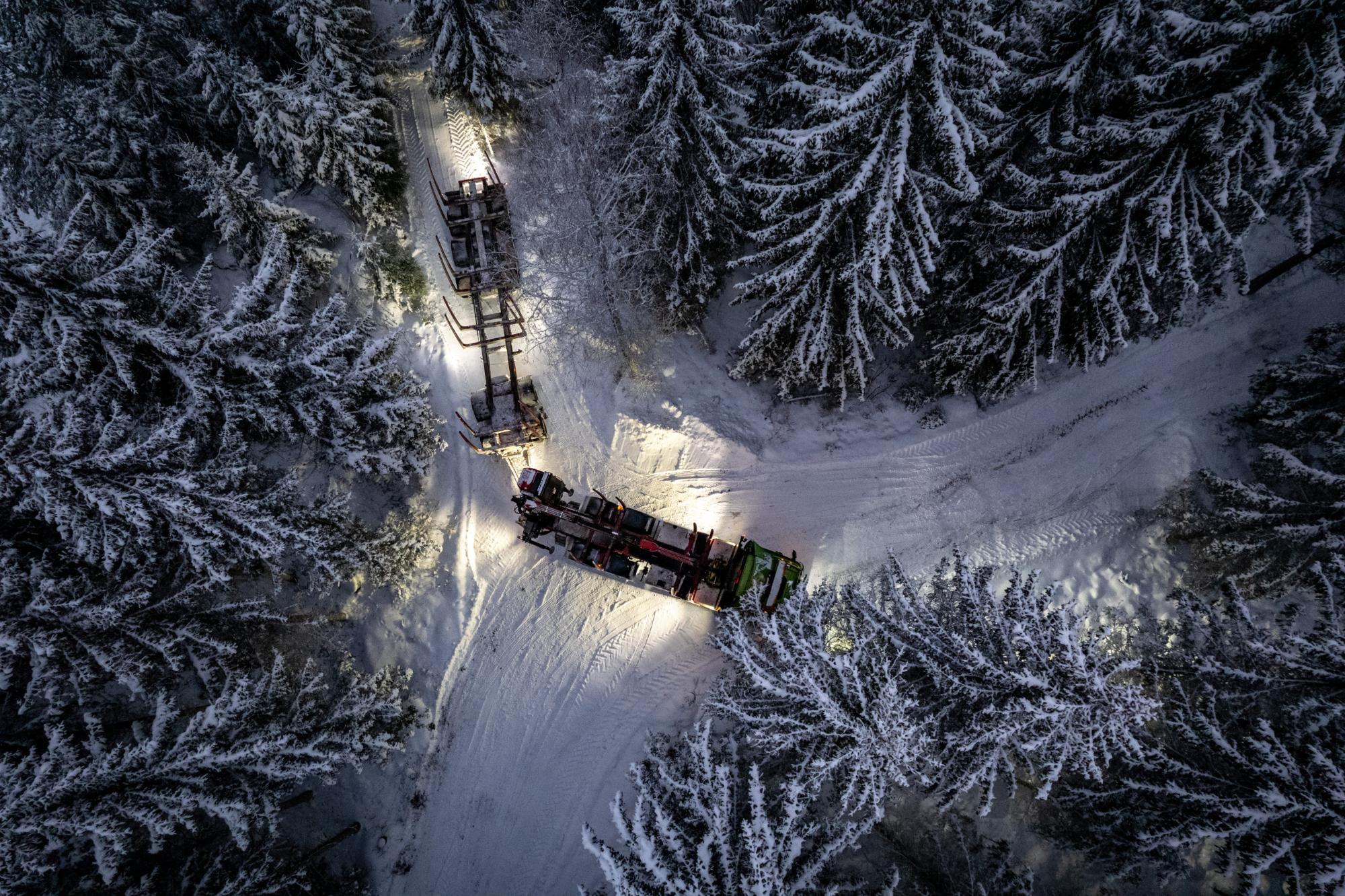
Current EU vehicle and emissions regulation has been designed primarily for Central and Southern European conditions. In northern regions, it is now beginning to fail in concrete ways. Extreme cold weather has damaged vehicles and forced them out of operation at mines, construction sites and worksites. At the same time, costs for entrepreneurs are rising, while traffic safety, the operating conditions of tourism and overall security of supply are being put at risk.
These issues were discussed at the Northern Corridors Under Pressure event held at the European Parliament on Tuesday, 3 February. The event was jointly organised by Members of the European Parliament Merja Kyllönen (The Left) and Katri Kulmuni (Renew), together with the transport and mobility sector EU-advocacy organisation FinMobility, the Finnish Transport and Logistics Association SKAL, the Central Union of Agricultural Producers and Forest Owners MTK, the Infra Contractors Association INFRA and the Finnish Bus and Coach Association LAL.
At the event, participants discussed the functionality of northern transport corridors and vehicle technologies with EU decision-makers and representatives of the sector.
“EU vehicle regulation does not recognise Arctic conditions. Those paying the price are individual entrepreneurs, transport chains and, ultimately, the competitiveness of the entire region and society’s security of supply,” Kyllönen said in her opening remarks.
Security of supply and heavy transport under strain
This winter, temperatures in Lapland have locally dropped to as low as –40°C. In such conditions, emissions-reduction technologies used especially in diesel-powered vehicles, including exhaust aftertreatment systems and associated fluids, do not withstand extreme cold.
The freezing and malfunctioning of aftertreatment systems have significantly increased costs and weakened traffic safety, including the safety of tourist transport in northern regions. The problems affect not only heavy goods transport and public transport, but also machinery critical to agriculture and forestry, mining, contracting services and overall security of supply.
The challenges are linked in particular to the EU-regulated AdBlue system, which freezes in Arctic conditions. AdBlue is an integral part of the EU vehicle emissions framework and type-approval system. Vehicles are type-approved on the basis of using a specific standardised urea solution to meet emissions limits. This standardised solution does not withstand the sub-zero temperatures commonly experienced in Finland without freezing. If the system fails, the vehicle automatically limits engine power or driving speed.
“Although cold-resistant solutions have been developed, they cannot be used without EU-level approval. Otherwise, vehicles no longer comply with type approval and liability shifts to entrepreneurs,” said Katriina Korhonen, Advisor at FinMobility and moderator of the panel discussion.
In the most severe cases, AdBlue-related failures can render a vehicle completely inoperable. This leads to the need for towing, operational downtime and rapidly escalating costs.
“Logistics in Finland must withstand extreme conditions. We can experience prolonged periods with temperatures well below –20°C. These conditions must be taken into account much more effectively in EU legislation,” emphasised Petri Murto, Director of professional services at SKAL.
“EU regulation on emissions-reduction systems must be amended so that solutions to wintertime operational problems can be found more effectively,” Murto stressed at the seminar.
Impacts extend widely across society
The problems are not limited to the transport sector. They have wide-ranging effects on agriculture, forestry, mining, tourism and public authorities such as rescue services and defence. Malfunctioning vehicle technology in extreme conditions poses a direct risk to traffic safety and security of supply.
“Agricultural and forestry machinery is essential to the entire food chain and industrial operations. When vehicle technology cannot withstand freezing temperatures, the risk of production interruptions increases immediately. This has repercussions from primary producers all the way to processing and logistics,” comments Niko Hyppönen, Field Manager at MTK Keski-Pohjanmaa.
At the European Parliament event, Members of the European Parliament as well as representatives from the transport, construction and agricultural sectors were heard. The aim is to bring the challenges of Arctic regions to the attention of several Commission Directorates-General and to initiate discussions on how northern conditions should be taken into account in forthcoming legislative frameworks concerning vehicle regulation, as well as on identifying solutions to current freezing-related challenges.
“EU regulation must function equally well in the North and in the South. Regional equality is a fundamental principle of the internal market,” Kulmuni concluded at the end of the event.
Further information:
Mr Niko Hyppönen, niko.hypponen@mtk.fi
Field Manager, MTK Central Ostrobothnia